Discover the best photo spots in Vienna, from imperial palaces and Gothic landmarks to colourful architecture, elegant streets and panoramic viewpoints. This practical guide will help you find the right location, light and angle for memorable Vienna photos.
Explore More Things to Do in Vienna
Vienna feels designed for photography. Grand façades line wide boulevards, palace gardens create natural symmetry, church towers rise above the old town and quiet side streets reveal a softer, more local side of the city.
The Vienna photo locations below suit first-time visitors, couples, architecture enthusiasts, content creators and anyone who simply wants beautiful travel memories. If you plan to photograph several major attractions in one trip, Vienna E-pass can make the sightseeing side of your itinerary easier to organise and leave more time to wait for the best light.
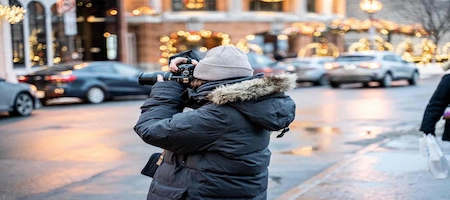
Photography note: Opening times, ticket conditions and rules for tripods, flashes or commercial photography may vary. Check the current guidance for any attraction you plan to enter, and avoid blocking entrances or busy walkways while taking photos.
Why Vienna Is One of Europe’s Most Photogenic Cities
Few cities offer Vienna’s range of visual styles within such manageable sightseeing areas. Imperial architecture, Baroque gardens, medieval details, traditional coffeehouses and contemporary cultural spaces all sit within reach of one another. The result is a city where formal palace portraits, candid street scenes and skyline images can fit into the same day.
- Imperial scale: Palaces, ceremonial squares and the Ringstrasse create unmistakably Viennese backgrounds.
- Architectural variety: Gothic, Baroque, Art Nouveau and playful modern design offer very different photographic moods.
- Four distinct seasons: Spring flowers, summer greenery, autumn colour and winter lights continually change familiar views.
- Easy combinations: Many central landmarks are close enough to connect on foot, making a curated route especially useful.
Photographers can focus on technical compositions, while casual travellers can find strong images with a phone simply by choosing a quieter hour and paying attention to symmetry, reflections and foreground details.
10 Best Photo Spots in Vienna
These photogenic places in Vienna combine iconic views with practical access and varied styles. Use the quick details below each location to plan around light, crowds and nearby sights.
1. Schönbrunn Palace
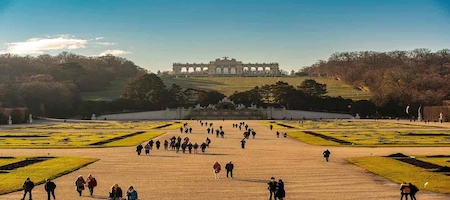
The golden palace façade, formal flowerbeds and long garden axes make Schönbrunn one of the most recognisable Vienna photography spots. For the grandest composition, walk towards the Neptune Fountain and Gloriette, then look back across the gardens towards the palace and city.
Best time: early morning for fewer people or late afternoon for warmer light
Best angle: palace symmetry from the main courtyard; elevated panorama from the Gloriette
Crowds: busiest around the palace entrance and midday
Nearby: Palm House, maze and Schönbrunn Zoo
2. St. Stephen’s Cathedral
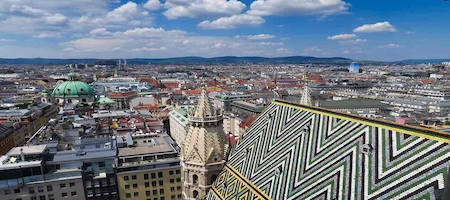
St. Stephen’s Cathedral brings Gothic drama to the heart of the old town. Its patterned roof, tall south tower and dark stone details create powerful landmark photographs, while the surrounding streets add movement and city atmosphere.
Best time: early morning for a clearer Stephansplatz; blue hour for atmosphere
Best angle: step towards Graben for a wider façade view; use upper viewpoints for roof details
Crowds: one of the busiest locations in central Vienna
Nearby: Graben, Peterskirche, Mozarthaus and Kärntner Strasse
3. Belvedere Palace
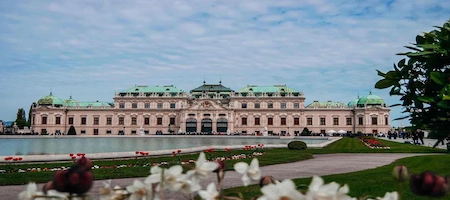
Upper Belvedere is ideal for elegant architecture and travel photography. The formal gardens create natural leading lines, while the reflecting pool can produce a near-symmetrical image of the palace when the water is still.
Best time: morning for softer light and a calmer garden
Best angle: frame Upper Belvedere across the reflection pool
Crowds: the main approach becomes busy during popular visiting hours
Nearby: Lower Belvedere, Botanical Garden and Schwarzenbergplatz
4. Karlskirche
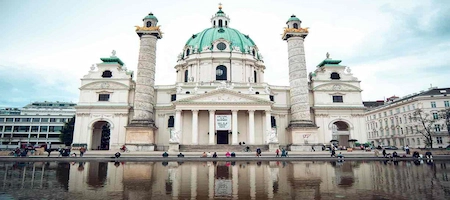
With its green dome, monumental columns and open setting, Karlskirche is among the most Instagrammable places in Vienna. The shallow pool in front of the church is the classic composition, especially when calm water mirrors the façade.
Best time: sunrise for quiet reflections; blue hour for illuminated architecture
Best angle: low and centred across the reflecting pool
Crowds: usually easier to photograph early or outside event periods
Nearby: Wien Museum, Naschmarkt and the Secession Building
5. Prater and the Giant Ferris Wheel
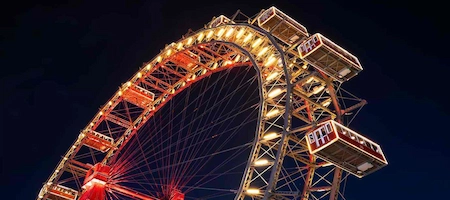
The Wiener Riesenrad brings nostalgic character to travel photos. Photograph its red cabins from the amusement park below, use nearby rides as colourful foreground elements or ride the wheel for broad views over Vienna.
Best time: late afternoon through blue hour
Best angle: from below for scale; from a cabin for skyline views
Crowds: livelier on warm evenings, weekends and holidays
Works best: at dusk or night when the park lights add colour
6. Hofburg Palace and Michaelerplatz
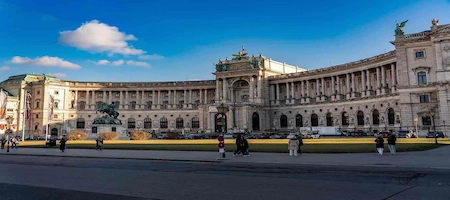
The sweeping Hofburg entrance, curved façades and open space of Michaelerplatz create a classic imperial Vienna scene. Horse-drawn carriages can add a sense of place, while the palace arches offer layered compositions leading into the courtyards.
Best time: early morning for the cleanest square views
Best angle: face the Michaelertor from the outer edge of the square
Crowds: steady foot traffic through much of the day
Nearby: Kohlmarkt, Spanish Riding School, Heldenplatz and Burggarten
7. Hundertwasserhaus
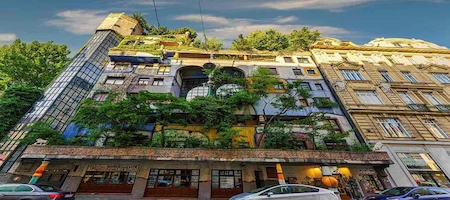
Colourful walls, uneven lines, trees and mosaic details make Hundertwasserhaus a playful alternative to Vienna’s formal palaces. Look for smaller sections and textures rather than trying to fit every feature into one frame.
Best time: morning or an overcast day for balanced colour
Best angle: use the opposite pavement for the façade; move closer for abstract details
Crowds: limited pavement space can feel busy
Please note: it is a residential building, so photograph respectfully from public areas
8. Vienna State Opera
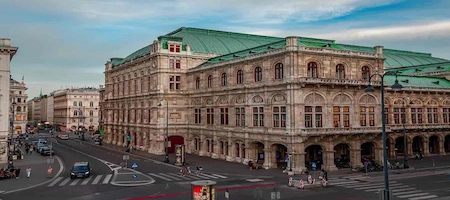
The Vienna State Opera is striking by day and especially atmospheric after dark. Use the surrounding Ringstrasse, passing trams and elegant streetlights to create a more dynamic city image instead of photographing the building in isolation.
Best time: blue hour and evening
Best angle: an elevated view from across Opernring or a wide street-level composition
Crowds: expect traffic and pedestrians near performance times
Nearby: Albertina, Burggarten, Kärntner Strasse and Hotel Sacher
9. MuseumsQuartier and Nearby Streets
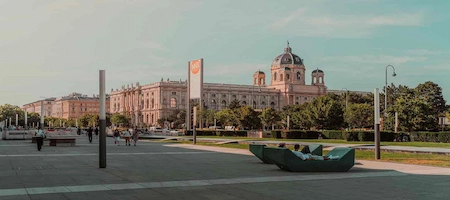
MuseumsQuartier mixes historic façades with bold contemporary forms, colourful courtyard furniture and relaxed urban life. It is a strong setting for casual portraits, street photography and lifestyle content that feels less formal than Vienna’s palace scenes.
Best time: late afternoon when the courtyards become lively
Best angle: contrast modern courtyard elements with the historic buildings
Crowds: social and energetic rather than purely touristic
Nearby: Maria-Theresien-Platz, Spittelberg and Kunsthistorisches Museum
10. Kahlenberg Panoramic Viewpoint
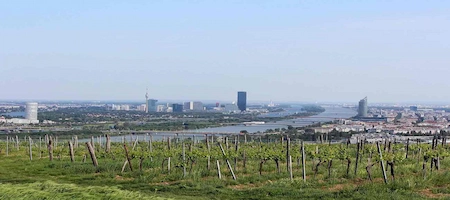
Kahlenberg provides a broad landscape view over Vienna, the Danube and the surrounding hills. It gives your collection a sense of scale and offers a quiet visual contrast to close-up palace and street photography in the centre.
Best time: late afternoon and sunset on a clear day
Best angle: use the city and Danube as layers within the panorama
Crowds: popular in good weather; arrive before sunset to choose a position
Alternative: choose a central rooftop terrace for a closer urban skyline
Best Times to Take Photos in Vienna
Light changes the character of Vienna. The same landmark can feel calm and romantic at sunrise, richly detailed in late-afternoon light or theatrical after dark. Choose your time according to the mood you want rather than trying to visit every place at midday.
| Time |
Why It Works |
Best Locations |
| Early morning |
Quieter squares, cleaner architectural compositions and soft light. This is the best option for famous landmarks without dense crowds. |
Schönbrunn, Stephansplatz, Belvedere, Karlskirche and Michaelerplatz. |
| Golden hour |
Warm, directional light gives façades more depth and creates flattering portraits. |
Palace gardens, Hofburg, Ringstrasse and Kahlenberg. |
| Blue hour |
A deep-blue sky balances illuminated buildings and helps city lights stand out before full darkness. |
Karlskirche, Vienna State Opera, Stephansdom and Prater. |
| After dark |
Streetlights, illuminated landmarks and reflections create dramatic evening images. |
Ringstrasse, the Opera area, old town streets and the Giant Ferris Wheel. |
How Vienna Changes with the Seasons
- Spring: palace gardens, flowering trees and fresh greenery suit romantic and colourful photography.
- Summer: long evenings allow relaxed golden-hour routes, but popular sights can stay busy later.
- Autumn: warm foliage adds texture around gardens, parks and elevated viewpoints.
- Winter: festive lights, Christmas markets and possible snow create atmosphere; carry a lens cloth for moisture and temperature changes.
Weather tip: Bright sun is not always the easiest light. Light cloud can soften shadows on ornate façades, while a brief shower may leave reflective pavements that look excellent at blue hour.
How to Plan a Photo-Friendly Vienna Itinerary
The easiest photo itinerary groups locations by area and saves long cross-city journeys for a separate part of the day. First-time visitors should prioritise one palace, the historic centre and one evening location rather than rushing between all ten spots.
Best for First-Time Visitors
Start at Schönbrunn or Belvedere early, then photograph Stephansdom, Hofburg and the Opera area. Finish at Karlskirche or Prater around blue hour.
Best for Architecture
Combine Belvedere, Karlskirche, the Vienna State Opera, Hofburg and St. Stephen’s Cathedral for Baroque, imperial and Gothic contrasts.
Best for Romantic Photos
Choose the gardens at Schönbrunn or Belvedere, elegant streets around Hofburg and an evening Ferris Wheel or rooftop view. Find more inspiration in our guide to romantic things to do in Vienna.
Best for Sunrise or Sunset
Karlskirche, Belvedere and central squares are strong early choices. For sunset, consider the Gloriette, Kahlenberg or a rooftop with a clear city view.
A Simple One-Day Vienna Photo Route
Early morning: Begin at Belvedere for the palace reflection and formal gardens before the busiest period.
Late morning: Continue to Karlskirche, then walk towards the Vienna State Opera and Albertina area.
Afternoon: Pause at a traditional café, then follow Hofburg, Michaelerplatz, Kohlmarkt and Graben to St. Stephen’s Cathedral.
Evening: Return to the Opera and Ringstrasse for blue-hour architecture, or travel to Prater for the illuminated Giant Ferris Wheel.
This route combines major Vienna landmarks, an easy café break and both daylight and evening photography. If you want to enter several attractions as well as photograph their exteriors, allow extra time and check what is included with Vienna E-pass before finalising the day.
More Things to Do in Vienna Beyond Photo Spots
Vienna’s best photo locations are only one part of the experience. Leave space to enter the landmarks, understand their history, enjoy the city’s food and music, and spend time away from the camera.
Landmarks and Historic Sites
Go beyond exterior photographs with palace interiors, historic churches and imperial collections. Compare the top Vienna landmarks when choosing your priorities.
Museums and Culture
Art museums, composer attractions and exhibitions explain the stories behind the architecture and bring valuable indoor variety to the day.
Classical Music and Opera
An opera or concert connects Vienna’s grand venues with the musical culture they were built to celebrate.
Family-Friendly Attractions
Prater, interactive museums, parks and animal attractions help families balance formal sightseeing with more relaxed experiences.
Evening Sightseeing
Illuminated buildings offer a completely different visual mood. Continue with our guide to Vienna sightseeing at night.
For a broader overview of attractions, neighbourhoods and trip ideas, explore the best things to do in Vienna and build a plan that matches your interests.
Make Sightseeing Easier with the Vienna E-pass
A photo-focused day often includes several famous sights, and separate ticket decisions can interrupt the route. Vienna E-pass can make access to included major attractions easier to organise, giving you a more straightforward framework for sightseeing.
- Spend less time planning separate attraction tickets.
- Connect several iconic sights within one practical itinerary.
- Keep more time available for viewpoints, gardens and the best natural light.
- Simplify a short stay or a first visit with several priorities.
Always check the current inclusions, validity and entry instructions before your visit, then match them with opening times and the light you want at each photo location.
Discover More Things to Do in Vienna
Combine Vienna’s most photogenic places with palaces, museums, coffeehouses, cultural evenings and memorable local experiences.
Explore the Best Things to Do in Vienna
Final Thoughts on Vienna’s Most Photogenic Places
The best photo spots in Vienna reveal a city of striking contrasts: formal palace gardens and lively amusement rides, Gothic stonework and colourful modern façades, grand avenues and quiet scenic corners. That variety makes Vienna rewarding whether you use a professional camera or a phone.
Begin with the iconic landmarks, but leave time for unexpected details—a reflection after rain, a framed view through a palace arch or a calm side street in warm evening light. Those unplanned images often become the most personal memories of a trip.
Continue planning with our complete guide to the best things to do in Vienna, and consider Vienna E-pass if you want a simpler way to organise several major attractions during a short stay.