Ten places that reveal Vienna’s historic identity
Vienna’s palaces, churches, civic buildings and cultural landmarks tell a much richer story when they are viewed together. This guide explains why the city’s essential historical sites matter, who each one suits and how to combine them without turning a cultural trip into a rushed checklist.
A balanced historic visit
01One major imperial palace
02One church or medieval landmark
03One civic or artistic site
04Time to connect them on foot
The best historical sites in Vienna cover far more than the Habsburg monarchy. Imperial residences explain court life and political power. Medieval churches show how faith and civic identity shaped the center. Parliament and Rathaus represent Vienna’s transformation into a modern capital, while the Secession Building and Mozarthaus connect the city to artistic change and musical history.
This article focuses on ten places that give first-time visitors a broad but coherent introduction. You do not need to enter all ten. Choose the sites that match your interests, group nearby locations and balance detailed interiors with outdoor architecture and walking time.
Vienna E-pass can help organize participating attractions and historic experiences, especially on a short trip. Always check the current admission method and any reservation requirements before fixing the day’s order.
Best first landmarkSt. Stephen’s Cathedral
Best complete palaceSchönbrunn Palace
Best imperial complexHofburg Palace
Best art and history mixBelvedere Palace
Why Vienna’s Historic Sites Are Worth Exploring
Vienna served for centuries as the center of Habsburg power and later as the capital of the Austrian Empire and Austria-Hungary. That role produced an exceptional concentration of residences, court institutions, churches, collections and ceremonial spaces. The grandeur is visible, but the most interesting part is how those places relate to one another.
Hofburg shows the monarchy embedded inside the city. Schönbrunn presents imperial life as a carefully arranged palace-and-garden landscape. St. Stephen’s Cathedral represents an older medieval Vienna, while the Ringstrasse buildings reveal how the city reinvented itself during the nineteenth century. The Secession Building then signals a generation of artists challenging established taste.
A curated guide prevents every old building from receiving equal priority. Some sites deserve several hours; others work best as twenty-minute architectural stops. Some are essential for first-time visitors, while others become more valuable when a traveler already understands the broader historical context.
Imperial historySee how power occupied the cityPalaces, treasuries and ceremonial spaces turn Habsburg history into a physical experience.
ArchitectureCompare several historical periodsGothic, Baroque, Neo-Gothic, classical and modern artistic ideas remain visible within a compact area.
Cultural identityConnect history with art and musicMuseums and composer sites show why Vienna’s past cannot be separated from its creative traditions.
Trip planningBuild a route instead of a checklistNearby places can be grouped while larger palace visits receive the time they actually need.
If you can visit only three historical places
Choose St. Stephen’s Cathedral for medieval Vienna, Hofburg or Schönbrunn for the Habsburg story, and Belvedere or the Ringstrasse civic buildings for art and later urban history. Those three choices create more historical range than visiting several similar palace interiors.
Best Historical Sites in Vienna
These ten Vienna historical landmarks cover imperial, religious, political, artistic and musical history. The suggested visit times are planning ranges rather than promises; opening conditions, queues, exhibitions and personal interests can change how long each stop takes.
01
Imperial residenceSchönbrunn Palace
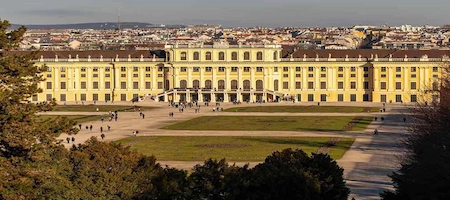
Schönbrunn Palace was the Habsburg summer residence and remains one of the most important historic landmarks in Vienna. The palace rooms introduce court ceremony and domestic life, while the gardens, fountains and Gloriette show how architecture and landscape were designed as one imperial statement.
Its value comes from scale. Unlike a central museum that can fit between other stops, Schönbrunn works best as the main event of a half day. Rushing the rooms and immediately leaving would miss the relationship between the residence, gardens and elevated views.
The site is especially rewarding for first-time visitors, palace enthusiasts, families who need outdoor space and travelers interested in Empress Maria Theresa, Emperor Franz Joseph or Empress Elisabeth. Use the complete Schönbrunn Palace guide to decide how much of the complex fits your day.
Why it mattersThe clearest complete experience of Habsburg residential life
AllowAbout 3–5 hours with rooms and gardens
Best timeMorning, particularly if palace rooms are the priority
NearbyPalace gardens, Gloriette and Schönbrunn cultural attractions
02
Imperial centerHofburg Palace
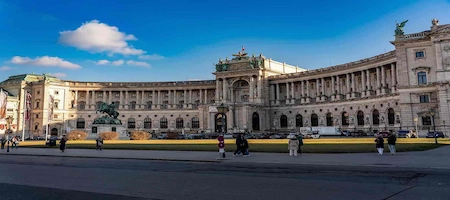
Hofburg was the principal Habsburg residence in central Vienna and grew over centuries into an enormous complex of wings, courtyards and institutions. Its changing architectural styles make the palace itself a record of imperial expansion.
Visitors can focus on the Imperial Apartments and Sisi Museum, the Imperial Treasury, the Spanish Riding School, the Imperial Chapel or simply the exterior courtyards and Heldenplatz. Trying to treat everything as one attraction is a common mistake. Choose an interior according to your interests and use the surrounding area as a historical walk.
Hofburg is the strongest option for travelers who want imperial history without leaving the Old Town. It also connects naturally with Graben, Kohlmarkt, the Austrian National Library, Albertina and the Ringstrasse. The Hofburg Palace guide explains how to separate the complex into manageable visits.
Why it mattersThe political and ceremonial heart of imperial Vienna
Allow1–4 hours depending on the selected interior
Best timeMorning for an interior; late afternoon for courtyards and façades
NearbyMichaelerplatz, Heldenplatz, Kohlmarkt and the Ringstrasse
03
Medieval landmarkSt. Stephen’s Cathedral
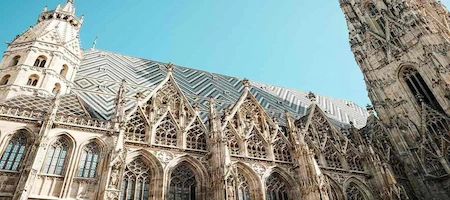
St. Stephen’s Cathedral is the Gothic heart of Vienna and the most natural starting point for understanding the historic center. Its towers and patterned roof dominate the Old Town skyline, while its position at Stephansplatz reflects centuries of religious, civic and commercial life.
The cathedral experience can be short or detailed. Travelers may appreciate the exterior and accessible interior areas, add a tower for city views, or explore further elements according to current access. What matters most is recognizing Stephansdom as an anchor: many historic streets and routes become easier to understand once the cathedral is established as the central reference point.
It suits every first-time visitor and works particularly well before walking through Graben and Kohlmarkt toward Hofburg. The dedicated St. Stephen’s Cathedral guide helps compare the different visit options.
Why it mattersVienna’s defining medieval and religious symbol
Allow45–90 minutes for a focused first visit
Best timeEarly morning for a calmer square and clearer exterior views
NearbyMozarthaus, Graben, Peterskirche and the Old Town lanes
04
Baroque palace and artBelvedere Palace
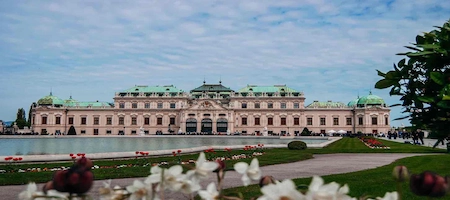
Belvedere is a Baroque palace complex created for Prince Eugene of Savoy. Its formal composition, gardens and elevated setting make it historically significant even before visitors enter the museum. The palace demonstrates that Vienna’s monumental residential culture extended beyond the imperial family.
Today, Belvedere is equally important for Austrian art. The Upper Belvedere connects grand historic interiors with works associated with Gustav Klimt and Vienna around 1900. That combination makes it one of the best places for travelers who do not want to choose between palace architecture and an art museum.
Allow time to see the building from across the gardens rather than moving directly from entrance to gallery. Belvedere works well as a half-day cultural visit or as the major interior on a day that also includes Karlskirche and central Vienna.
Why it mattersBaroque aristocratic history combined with Austrian art
AllowAbout 2–3 hours for palace, collection and gardens
Best timeEarly or late in the day for garden views and photographs
NearbyLower Belvedere, Botanical Garden and Vienna Central Station area
05
Baroque churchKarlskirche
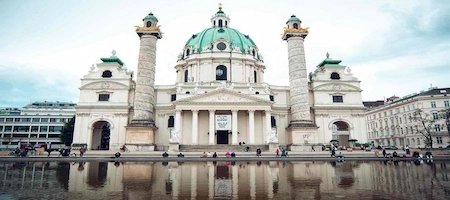
Karlskirche is one of Vienna’s most visually powerful Baroque churches. Emperor Charles VI commissioned it following a plague epidemic, dedicating the church to St. Charles Borromeo. Its great dome, monumental columns and broad façade create a theatrical composition that is best understood from across Karlsplatz.
The church matters because it connects religious history, dynastic representation and Baroque urban design. Its spacious setting also offers a useful contrast with St. Stephen’s Cathedral, which rises from the dense medieval street pattern of the Old Town.
Karlskirche is a strong choice for architecture lovers, photographers and travelers who want a substantial church visit outside the cathedral core. It combines easily with the Secession Building, Naschmarkt, Wien Museum and the State Opera area.
Why it mattersA landmark of Viennese Baroque architecture and imperial patronage
Allow45–75 minutes, plus time around Karlsplatz
Best timeLate afternoon or blue hour for the exterior setting
NearbySecession Building, Wien Museum, Naschmarkt and State Opera
06
Political landmarkAustrian Parliament Building
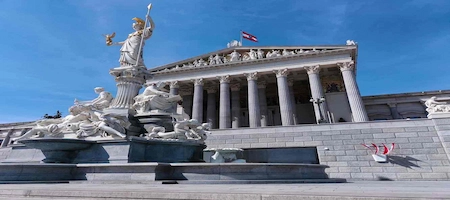
The Austrian Parliament Building represents a different form of Vienna history: civic institutions rather than royal residence. Designed by Theophil Hansen in a Greek-inspired classical style, it was created during the Ringstrasse transformation of the late nineteenth century.
Its architecture used references to ancient Greece to communicate ideas about law, debate and representative government. The building’s location near government, museum and cultural institutions makes it an important stop for understanding how Vienna presented itself as a modern capital.
Even an exterior visit adds value to a Ringstrasse walk. Travelers particularly interested in political history can investigate current visitor-center or tour options directly before the trip, as access arrangements may change.
Why it mattersA major symbol of Austrian political and parliamentary history
Allow20–40 minutes outside; longer for an arranged interior visit
Best timeMorning for façade details or evening for illumination
NearbyVolksgarten, Rathaus, MuseumsQuartier and Maria-Theresien-Platz
07
Civic landmarkRathaus — Vienna City Hall
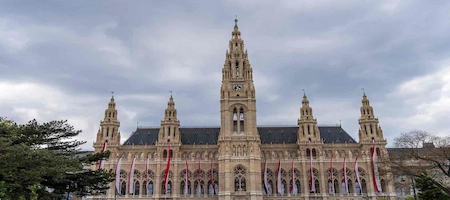
Vienna City Hall is one of the Ringstrasse era’s defining public buildings. Its Neo-Gothic design, tall central tower and ceremonial scale gave municipal government an architectural presence comparable to the grand cultural institutions nearby.
Rathaus remains connected to everyday public life. Rathausplatz and Rathauspark regularly host seasonal events, markets, festivals and public gatherings. That active use makes the building more than a preserved nineteenth-century façade; it continues to represent civic Vienna.
Architecture fans should compare Rathaus with St. Stephen’s Cathedral and Votivkirche. All use Gothic forms, but they belong to different periods and urban purposes. For a coherent route, connect the building with Parliament, Burgtheater and the University.
Why it mattersHistoric civic architecture that still shapes Vienna’s public life
Allow20–40 minutes for the exterior, park and square
Best timeCheck the square’s event calendar before choosing a quiet or lively visit
NearbyParliament, Burgtheater, University of Vienna and Votivkirche
08
Artistic turning pointSecession Building
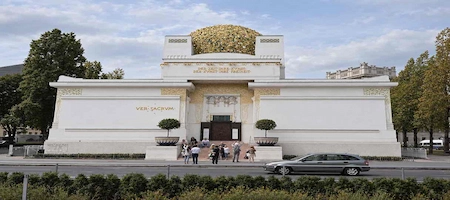
The Secession Building marks a decisive break from the historicist architecture associated with much of nineteenth-century Vienna. Joseph Maria Olbrich designed it as an exhibition space for artists seeking greater freedom from established institutions and conservative artistic expectations.
Its clean geometric form and distinctive gilded dome make the building immediately recognizable. Inside, Gustav Klimt’s Beethoven Frieze connects the site with Vienna’s artistic life around 1900 and the broader movement now associated with the Vienna Secession.
This is an essential stop for travelers who want Vienna’s history to extend beyond palaces and monarchy. Combine it with nearby Karlskirche, Naschmarkt or an art museum to follow the city’s transition toward modern design and visual culture.
Why it mattersA symbol of artistic independence and Vienna Modernism
Allow45–90 minutes depending on exhibitions
Best timeDaylight for the façade and gilded dome
NearbyNaschmarkt, Karlskirche, Academy of Fine Arts and State Opera
09
Music historyMozarthaus Vienna
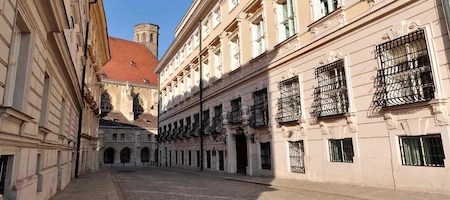
Mozarthaus Vienna occupies the only surviving Viennese residence in which Wolfgang Amadeus Mozart lived. He stayed in the Domgasse apartment from 1784 to 1787, during a highly productive period of his career.
The museum makes Vienna’s musical reputation more personal. Instead of experiencing Mozart only through concerts or monuments, visitors encounter the scale and setting of a real residence near St. Stephen’s Cathedral. Exhibitions place the apartment within Mozart’s Viennese years and the cultural world around him.
Mozarthaus is best for music lovers and travelers who want a focused museum that fits naturally into an Old Town walk. It combines easily with Stephansdom, Blutgasse and the streets around the cathedral. For broader context, continue with the Vienna music culture guide.
Why it mattersVienna’s surviving direct connection to Mozart’s domestic life
AllowAbout 60–90 minutes
Best timeBefore or after Stephansdom to minimize walking
NearbySt. Stephen’s Cathedral, Domgasse and the central Old Town
10
Dynastic collectionImperial Treasury Vienna
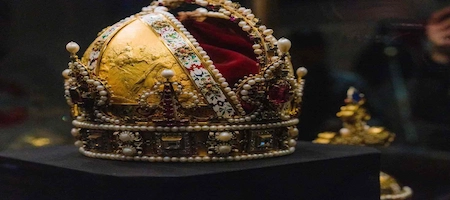
The Imperial Treasury turns the abstract language of monarchy into material objects. Crowns, regalia, ceremonial garments, religious treasures and dynastic possessions demonstrate how rulers communicated authority, continuity and sacred legitimacy.
Its importance reaches beyond Austrian history because the collection includes objects connected with the Holy Roman Empire as well as the Austrian Empire and the Habsburg dynasty. The Treasury is therefore ideal for travelers interested in monarchy, European political symbolism and historic craftsmanship.
The museum is located within the Hofburg complex, making it easy to combine with palace courtyards, the Austrian National Library or another imperial attraction. Avoid pairing it with several similarly dense collections on the same day; the objects reward careful looking and historical explanation.
Why it mattersRoyal and imperial power expressed through original objects
AllowAbout 60–90 minutes
Best timeEarlier in the day, before museum fatigue develops
NearbyHofburg courtyards, National Library, Albertina and Heldenplatz
Planning note: current opening hours, tour schedules, restoration work and entry conditions can change. Confirm official information before traveling, particularly for palace rooms, church interiors, Parliament visits and timed museum admission.
How to Choose Which Historic Sites to Visit
The correct choice depends on the kind of history you want to experience. A famous place is not automatically the best use of your limited time. Match each major site to an interest, then group compatible choices by area.
Best for first-time visitorsStephansdom, Hofburg and SchönbrunnThese sites establish the medieval center, the imperial city and the scale of Habsburg palace culture. Add only one major interior if you have a single day.
Best for imperial historyHofburg, Schönbrunn and the TreasuryHofburg explains the central court, Schönbrunn adds residential and garden life, and the Treasury focuses on dynastic symbols and regalia.
Best for architectureStephansdom, Karlskirche, Parliament and SecessionThis combination compares Gothic, Baroque, classical historicism and Vienna Modernism without repeating the same kind of building.
Best for art and musicBelvedere, Secession and MozarthausUse these sites to connect aristocratic collecting, artistic change around 1900 and Vienna’s composer history.
Best for a short stayOld Town plus one Ringstrasse sectionBegin at the cathedral, walk to Hofburg and finish at Parliament or Rathaus. This covers several themes with minimal transport.
Best for repeat visitorsCivic and modern cultural landmarksPrioritize Parliament, Rathaus, Secession and focused museums after the major imperial landmarks have already been experienced.
A practical one-day historical route
This route keeps the morning within the Old Town, allows one meaningful interior and then moves toward the Ringstrasse without crossing the city repeatedly.
Morning
St. Stephen’s Cathedral and Mozarthaus
Begin at Stephansplatz, visit the cathedral according to your priorities and walk the short distance to Domgasse for music history.
Late morning
Graben, Kohlmarkt and Hofburg
Use the historic streets as the connection. At Hofburg, choose either a major interior or a courtyard-focused exterior visit.
Afternoon
Imperial Treasury or an art museum
Select one substantial collection. Do not combine several large museums simply because they appear close on the map.
Late day
Parliament and Rathaus
Finish with exterior Ringstrasse architecture, parks and squares. This creates a clear transition from imperial to civic Vienna.
For a longer stay, place Schönbrunn on a separate half day and combine Belvedere with Karlskirche or Secession. The 3 days in Vienna itinerary helps distribute the city’s major areas without unnecessary travel.
More Things to Do in Vienna Beyond Historic Sites
Historic sightseeing is central to Vienna, but it is only one part of the city’s appeal. A balanced itinerary adds experiences that make the historic setting feel alive rather than treating Vienna as a collection of monuments.
Landmarks and viewsSee the wider city
Combine heritage sites with the Prater, Danube Tower, gardens or scenic viewpoints. The guide to the top Vienna landmarks mixes historic and modern icons.
Museums and exhibitionsChoose collections by interest
Art, city history, natural history, design and music museums offer very different experiences. Compare the best museums in Vienna by collection, building and the amount of time each visit requires.
Music and performanceHear Vienna’s cultural legacy
Concerts, opera, composer museums and historic venues transform music history into a living evening experience. Start with the Vienna classical music guide.
Cafés and local cultureBuild in slower pauses
A traditional coffeehouse stop provides rest between dense interiors while adding another important cultural tradition to the day.
FamiliesBalance detail with interaction
Mix one major historic attraction with an interactive museum, park or family experience instead of expecting children to complete several palace tours.
Seasonal ViennaAdapt the route
Gardens suit mild weather, museums support rainy days, and seasonal events can transform Rathausplatz, palace grounds and central squares.
Use the main guide to the best things to do in Vienna to combine history with museums, music, viewpoints, cafés, family attractions and seasonal experiences. For transport, neighborhoods and broader trip decisions, continue with our Vienna Travel Guide.
Make Historic Sightseeing Easier with the Vienna E-pass
A historical itinerary may include several ticketed palaces, museums, churches, tours and cultural experiences. Vienna E-pass can make the planning process more organized by presenting participating attractions and their access instructions in one place.
Start by choosing the historical sites you genuinely want to enter. Next, check whether each participating experience requires a reservation, a meeting point, a printed voucher or another redemption step. Place fixed-time visits into the itinerary first, then keep walks, exterior landmarks and café breaks flexible.
This is particularly useful for first-time travelers and short stays, when losing time to unclear ticket arrangements or unnecessary travel can affect the entire day. The pass supports planning, but realistic pacing still matters: one major palace or museum interior is usually enough for a normal sightseeing day.
Review the current Vienna E-pass attraction directory before finalizing your route.
01Choose the historical experiences that matter most
02Check current reservation and redemption rules
03Group nearby attractions into one route
04Keep enough time for walking and breaks
Final Thoughts on Vienna’s Historic Places
Vienna stands out as a historic European destination because several different stories remain visible within the same city. Schönbrunn and Hofburg explain imperial power. St. Stephen’s Cathedral and Karlskirche connect medieval and Baroque religious history. Parliament and Rathaus represent civic Vienna, while Secession and Mozarthaus show that art and music are essential parts of the historical landscape.
First-time visitors should begin with the cathedral and Old Town, choose either Hofburg or Schönbrunn for a substantial imperial experience and add one site that reflects a personal interest. Travelers with more time can explore less obvious civic buildings, specialized collections and twentieth-century history instead of simply repeating the most famous palaces.
Continue with the complete Vienna history and historic landmarks guide for wider context, then use the guide to the best things to do in Vienna to build a balanced trip beyond historic sites.