Read Vienna through the places that shaped it
This Vienna history and historic landmarks guide connects imperial palaces, medieval streets, monumental churches, museums and the Ringstrasse into one clear story. Use it to decide what matters most, group nearby sites and build a history-focused visit that still leaves room to experience the living city.
A strong first history plan
01Walk the medieval and imperial center
02Choose one major palace interior
03Add one museum or church visit
04Use the Ringstrasse to connect the story
Vienna can look immediately elegant, but its history is not contained in a single palace or period. Roman foundations sit beneath medieval streets. Gothic towers rise above Baroque churches. Habsburg residences lead into nineteenth-century museums, civic buildings and grand boulevards. Twentieth-century memorials then add more difficult chapters to the same urban landscape.
That variety is precisely why a structured approach helps. Instead of treating every famous building as an isolated photo stop, connect places by theme: imperial power, religious life, art and collecting, urban change, or everyday Old Town history. The result is a more meaningful visit and a far more realistic itinerary.
Vienna E-pass can support attraction-heavy days by bringing participating historic experiences into one planning system. Check the current attraction details and any booking requirements before setting your route, then leave enough space between interiors to appreciate Vienna’s squares, streets and cafés.
Best starting pointSt. Stephen’s Cathedral and the Old Town
Imperial centerpieceHofburg for court history and central Vienna
Most complete palace daySchönbrunn for rooms, gardens and scale
Best connecting walkRingstrasse for architecture and civic history
Why Vienna Is One of Europe’s Great Historic Cities
Vienna’s importance grew from its position on the Danube and at the crossroads of Central Europe. The settlement developed from Roman Vindobona into a medieval city and later became the dynastic center of the Habsburg lands. For centuries, decisions made in Vienna affected a realm extending far beyond modern Austria. The city’s architecture still reflects that political reach.
Yet imperial history is only one layer. Churches reveal the power of religious institutions and the changing architectural tastes of different centuries. Museums preserve collections shaped by court patronage, scholarship and civic ambition. Public buildings along the Ringstrasse express the confident nineteenth-century transformation of Vienna into a modern capital.
The historic center is especially valuable because these layers remain close together. Within one walk, a visitor can move from the Gothic core around Stephansplatz to Baroque squares, Hofburg courtyards, nineteenth-century cultural institutions and memorials addressing the twentieth century. Vienna’s history is therefore visible as a connected cityscape rather than a collection of disconnected monuments.
The best way to understand historic Vienna
Begin with the Old Town to learn the city’s basic geography, choose one imperial residence for depth, add one church or museum that matches your interests, and then walk part of the Ringstrasse. This sequence moves naturally from the medieval center to imperial Vienna and the modern civic capital.
Vienna History at a Glance
First-time visitors do not need to memorize a long chronology before arriving. A few broad periods are enough to make the landmarks easier to read. Each historical layer has left a different type of place behind.
Roman origins
Vindobona and the early urban footprintA Roman military settlement occupied part of today’s central Vienna. Archaeological traces beneath and around the Old Town remind visitors that the city’s story began long before its imperial palaces.
Medieval city
Walls, churches and a growing trading centerMedieval Vienna developed around streets, markets, religious institutions and defensive structures. St. Stephen’s Cathedral became the defining monument of this period and remains the visual heart of the city.
Habsburg Vienna
A dynastic capital shaped by court lifeThe Habsburgs transformed Vienna into a political and ceremonial center. Hofburg expanded over centuries, while court institutions, residences and collections gave the city its enduring imperial identity.
Baroque transformation
Palaces, domes, gardens and theatrical architectureAfter the Ottoman siege of 1683, Vienna entered a major period of rebuilding and aristocratic expansion. Schönbrunn, Belvedere, Karlskirche and numerous town palaces express the confidence of the Baroque city.
Ringstrasse era
The imperial capital becomes a modern metropolisFrom the mid-nineteenth century, the old fortifications gave way to a monumental boulevard lined with museums, government buildings, theaters, gardens and elite residences. The Ringstrasse made public culture part of Vienna’s urban identity.
Modern memory
Republic, dictatorship, war and reconstructionThe end of the monarchy in 1918, authoritarian rule, the Anschluss and Nazi persecution, wartime destruction, occupation and the post-1955 republic all shaped modern Vienna. Memorials and museums add these essential histories to the imperial cityscape.
These layers overlap rather than replacing one another. That is why the same walk can include Roman remains, a medieval cathedral, a Baroque church, an imperial palace and a modern memorial. Use this timeline as an orientation tool, then follow the periods or themes that interest you most.
The Most Important Historic Landmarks in Vienna
The best historic landmarks in Vienna represent different parts of the city’s story. Some are essential because of their political importance, others because their architecture defines the skyline or their collections explain how Vienna understood itself.
01
St. Stephen’s Cathedral
Stephansdom anchors the medieval center and gives Vienna one of its most recognizable silhouettes. Its long construction history, Gothic form, patterned roof and prominent towers make it both a religious monument and a practical starting point for exploring the Old Town.
Use the St. Stephen’s Cathedral guide to compare the main church, towers and other visit options before deciding how much time to allow.
Best forA first encounter with medieval Vienna
02
Hofburg Palace
Hofburg is not one building but a vast palace complex developed across several centuries. Courtyards, ceremonial wings, museums, the Imperial Chapel, the Spanish Riding School and nearby squares reveal how court life occupied the center of Vienna.
The complete Hofburg Palace Vienna guide helps separate the complex into manageable experiences.
Best forHabsburg power, court culture and royal collections
03
Schönbrunn Palace
Schönbrunn was the Habsburg summer residence and offers the most expansive palace experience in Vienna. State rooms, formal gardens, fountains and the Gloriette create a complete imperial landscape rather than a single interior visit.
Plan the palace and grounds with the dedicated Schönbrunn Palace visitor guide.
Best forA half-day imperial experience with gardens
04
Belvedere Palace
The Belvedere complex combines Baroque architecture, formal gardens and a major art collection. Built for Prince Eugene of Savoy, it demonstrates that Vienna’s palace culture extended beyond the imperial family. Today, the Upper Belvedere is especially important for understanding Austrian art around 1900.
It is an excellent choice when you want architecture and museum content in one visit.
Best forBaroque design paired with Austrian art
05
Karlskirche
Karlskirche is one of Vienna’s most dramatic Baroque churches. Its dome, monumental columns and open setting at Karlsplatz give it a different character from the dense medieval surroundings of Stephansdom. The building also shows how architecture could communicate faith, dynastic authority and civic recovery.
Best forBaroque architecture and a memorable city-square view
06
The Ringstrasse
The Ringstrasse turns urban planning into a historical attraction. Vienna’s State Opera, major museums, Parliament, Rathaus, Burgtheater and University line or face the boulevard, creating a sequence of institutions designed to represent a modern imperial capital.
Follow the Ringstrasse walking guide to explore the most rewarding section without attempting the entire circuit.
Best forNineteenth-century architecture and city planning
07
Old Town squares and historic streets
Stephansplatz, Graben, Petersplatz, Kohlmarkt, Michaelerplatz, Judenplatz and the lanes around them connect religious, commercial, courtly and civic history. The value lies not only in individual monuments but in the distances and relationships between them.
For a broader overview and additional choices, continue with the guide to the top Vienna landmarks.
Best forSeeing several historic layers in one compact walk
Do not judge importance by size alone. A monumental palace can explain imperial ceremony, while a small square, memorial or archaeological site may reveal more about the lives and losses that shaped Vienna. A strong history itinerary combines both.
Imperial Vienna and the Habsburg Legacy
The Habsburgs ruled Austria for centuries and made Vienna the center of a composite monarchy that included many peoples, languages and territories. Their legacy is visible not only in portraits and gilded rooms but in the organization of the city: court offices clustered around Hofburg, summer life shifted to Schönbrunn, dynastic burial took place in the Imperial Crypt, and collections accumulated in treasuries, libraries and museums.
Hofburg is the best place to understand the machinery of the court. Its successive wings show that imperial Vienna was constantly adapted rather than created in one moment. Schönbrunn presents the monarchy in a more formal residential and garden setting. The Imperial Crypt introduces dynastic memory and burial ritual, while the Imperial Treasury brings visitors close to objects used to express legitimacy and rank.
The most useful approach is to follow a human story rather than only admire decoration. Maria Theresa helps explain eighteenth-century state and court culture. Emperor Franz Joseph and Empress Elisabeth connect the palace world with the monarchy’s final decades. The end of Austria-Hungary in 1918 then changes how every imperial room is understood: these are preserved spaces from a political order that no longer exists.
Start with the complete Hofburg guide, then choose Schönbrunn or another imperial collection according to your time and interests.
Political centerHofburg Palace and Heldenplatz
Residential scaleSchönbrunn Palace and gardens
Dynastic memoryImperial Crypt and royal monuments
Material powerTreasury, collections and ceremonial objects
The Best Palaces in Vienna
Vienna’s three most useful palace choices are not interchangeable. Schönbrunn is the strongest all-round imperial destination, Hofburg is the central complex for court history, and Belvedere works best when palace architecture and fine art are equally important.
Palace 01Schönbrunn
CharacterImperial summer residence
Strongest featureRooms, gardens and monumental scale together
Choose it whenYou can devote at least half a day
Schönbrunn is the clearest single choice for first-time visitors who want a complete palace experience.
Palace 02Hofburg
CharacterWorking imperial complex in the city center
Strongest featureMultiple museums, courtyards and institutions
Choose it whenYou want history without leaving the Old Town
Hofburg rewards selective planning. Decide which interior matters before arriving rather than treating the entire complex as one attraction.
Palace 03Belvedere
CharacterBaroque palace and art museum
Strongest featureArchitecture, gardens and Austrian art
Choose it whenKlimt and art around 1900 are priorities
Belvedere is the best bridge between Vienna’s aristocratic landscape and its artistic identity.
If you have time for only one, choose Schönbrunn for the grandest complete palace day, Hofburg for the richest connection to central Vienna, or Belvedere for the best palace-and-art combination. A future guide to the best palaces in Vienna can deepen these comparisons without overloading this pillar page.
Historic Churches and Religious Landmarks
Vienna’s churches are central to the city’s skyline, neighborhood identity and architectural history. They were places of worship, ceremony, commemoration, music and political representation. Even travelers with limited interest in religious history can use them to understand how Vienna changed from the Middle Ages through the Baroque and into the nineteenth century.
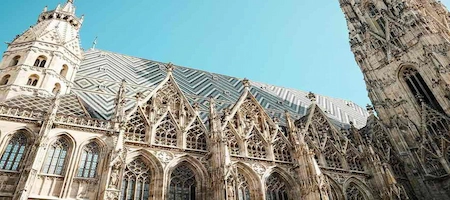
Stephansdom
The essential medieval landmark. Its scale, towers and location explain why Stephansplatz remains Vienna’s symbolic center. Prioritize it if this is your first visit or your only the church interior.
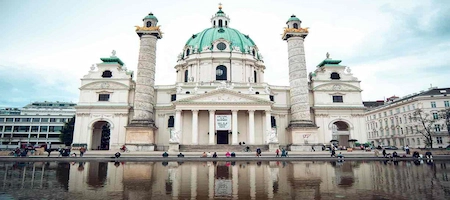
Karlskirche
The strongest Baroque contrast to Stephansdom. Its monumental façade and dome are best appreciated from across Karlsplatz, where the surrounding space becomes part of the composition.
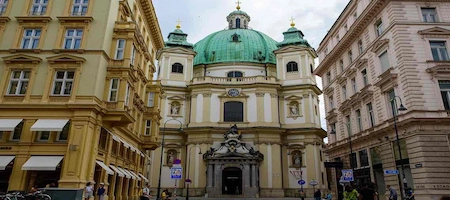
Peterskirche
A compact Baroque church just off Graben. Its richly decorated interior makes it an easy addition to an Old Town walk and demonstrates how much historical density exists within a small central area.
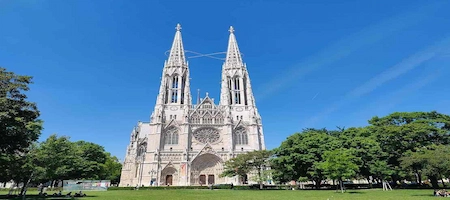
Votivkirche
A major Neo-Gothic landmark near the Ringstrasse and University. Compare it with St. Stephen’s to see how nineteenth-century architects reinterpreted Gothic forms for a new urban setting.
Churches remain active religious spaces. Dress and behave respectfully, avoid disrupting services, and confirm access conditions before making a special journey. The future historic churches in Vienna guide is the right supporting page for detailed visiting advice, additional churches and architectural context.
Museums, Palaces, and Cultural Heritage
Vienna’s museums do more than display art. Their collections reveal how emperors, aristocrats, scholars and public institutions classified the world and presented cultural authority. The museum buildings themselves are often part of that historical message.
Imperial collectingKunsthistorisches Museum
The building and collections work together as an expression of Habsburg patronage. Choose it for European painting, antiquities and one of Vienna’s grandest museum interiors.
See the current Kunsthistorisches Museum experience when planning admission.
Austrian artUpper Belvedere
The palace setting leads into Austrian artistic history, especially the period around 1900. It is a strong choice for visitors interested in Klimt, Vienna Modernism and the relationship between architecture and art.
Review the Upper Belvedere visitor information before setting the day.
City historyWien Museum
A city-history museum provides a different perspective from royal apartments or picture galleries. It helps connect urban development, social change and everyday life to the monuments seen outside.
Imperial objectsImperial Treasury
Ceremonial objects make abstract ideas such as dynasty, rank and legitimacy tangible. This is a focused alternative for visitors who want imperial history without another large palace-room sequence.
Architecture and identityRingstrasse museums
The Kunsthistorisches and Natural History museums were designed as monumental counterparts. Their setting around Maria-Theresien-Platz is an important historical experience even before entering either building.
Modern memoryHistory beyond the monarchy
Museums, memorials and walking tours address Jewish Vienna, political conflict, the Nazi period, war and postwar reconstruction. These histories prevent the city’s past from being reduced to imperial nostalgia.
To avoid museum fatigue, choose collections by question. If you want to understand Habsburg taste, select the Kunsthistorisches Museum or Treasury. For Austrian art and Vienna around 1900, prioritize Belvedere. For the development of the city itself, choose a city-history museum. Future supporting pages about the best museums in Vienna and the most popular museums and palaces can then provide detailed comparisons, temporary-exhibition guidance and practical visit planning.
Vienna Old Town and the Historic Center
The Old Town is the best place to feel Vienna’s historical continuity because the city’s major layers remain walkable. The area is not an outdoor museum: offices, shops, homes, churches, cafés and transport continue to use streets shaped by older patterns. That living quality makes the center more meaningful than a sequence of façades.
Start at Stephansplatz to establish the cathedral as the central reference point. Walk along Graben to see how a broad commercial street now occupies part of Vienna’s older urban core. Detour to Peterskirche, then continue by Kohlmarkt toward Michaelerplatz and Hofburg. This short route connects church history, commerce, aristocratic addresses and imperial power.
Stop 01
Stephansplatz
Begin with the cathedral exterior and look outward toward the surrounding street network. This is the clearest point from which to understand the medieval center.
Stop 02
Graben and Petersplatz
Compare Vienna’s commercial present with its Baroque religious and commemorative architecture. Small detours reveal more than walking straight through.
Stop 03
Kohlmarkt
Use the long view toward Hofburg to see how a street can create a ceremonial approach. Historic prestige and modern luxury retail occupy the same urban axis.
Stop 04
Michaelerplatz and Hofburg
Roman remains, a major church, historic façades and the palace entrance meet in one square. It is one of Vienna’s strongest examples of layered history.
Extension
Heldenplatz and the Ringstrasse
Continue through the palace courtyards to the monumental open spaces beyond. The transition shows how imperial Vienna expanded from the old center toward the nineteenth-century boulevard.
Use the Vienna City Center Walking Guide for a practical route through the central landmarks. A dedicated Vienna Old Town history guide can later provide deeper context on squares, lost walls, archaeological remains and historic communities, while an Old Town walking route can concentrate on turn-by-turn exploration.
Historic Walking Routes in Vienna
Walking is one of the best ways to explore historic Vienna because it preserves the relationship between landmarks. Distances, sightlines, courtyards and changes in street width explain how power and public life were organized. Choose a route by historical theme rather than trying to cover every district at once.
Route style 01Old Town and imperial core
Best for medieval streets, Stephansdom, Baroque churches and Hofburg. This is the strongest first walk and works well in two to four hours, depending on interior stops.
Follow the historic city-center route.
Route style 02Ringstrasse architecture
Best for nineteenth-century museums, Parliament, Rathaus, Burgtheater, university buildings and formal gardens. Keep most buildings as exterior stops and choose only one interior.
Use the Ringstrasse walking guide.
Route style 03Theme-based streets
Best for repeat visitors or slower trips. Follow imperial approaches, religious landmarks, music history, Jewish Vienna, architecture around 1900 or twentieth-century memory.
A future guide to Vienna’s best streets can help match individual streets to these themes.
Avoid placing several major interiors inside one walking route. Every admission stop changes a two-hour walk into a half-day or full-day plan. It is usually better to make the walk the main experience, add one carefully chosen interior and reserve a second museum or palace for another day.
Vienna History for First-Time Visitors
A first trip does not require exhaustive historical coverage. The goal is to encounter the city’s major layers clearly enough that later sights make sense. One medieval landmark, one imperial complex, one palace or major museum and one architectural walk create a strong foundation.
If you have half a dayOld Town and Hofburg exteriorsWalk from St. Stephen’s Cathedral through Graben and Kohlmarkt to Hofburg. Add one short interior only if timing is comfortable.
If you have one dayOld Town plus one major interiorChoose Hofburg, the Kunsthistorisches Museum or Belvedere after a morning walk. Finish with a short Ringstrasse section.
If you have two daysCentral history plus SchönbrunnKeep one day for the historic center and another for Schönbrunn’s palace-and-garden landscape. This avoids rushing between distant areas.
If history is your main interestBuild by theme, not fameCombine imperial, religious, artistic and twentieth-century sites so the itinerary explains change across time rather than repeating similar interiors.
The guide to Vienna attractions for first-time visitors helps balance historic priorities with other city experiences. If time is limited, do not visit Schönbrunn, Hofburg and Belvedere interiors on the same day. Their historical roles differ, but the visual richness can blur together when visits are rushed.
How to Plan a History-Focused Trip to Vienna
History-focused travel works best when dense interiors alternate with outdoor movement. A palace demands sustained attention; a walking route provides context and fresh air; a café creates a natural pause; a church or small museum can then add a different scale of experience.
Morning
Begin with streets and orientation
Explore Stephansplatz, Graben, Kohlmarkt and the Hofburg courtyards before central Vienna becomes busiest. Exterior context makes later museum and palace visits easier to understand.
Midday
Choose one substantial interior
Select a palace, museum or cathedral experience according to your main interest. Allow enough time to engage with it instead of racing through for completion.
Afternoon
Reset with a café or public garden
Burggarten, Volksgarten, Karlsplatz or a traditional coffeehouse can break up the day. Rest is part of good historical sightseeing, not time lost from it.
Late day
Use architecture as the final chapter
Walk a Ringstrasse section or return to an Old Town square when the light changes. Exterior landmarks often become easier to appreciate after the day’s historical context.
For a multi-day visit, use the 3 days in Vienna itinerary to distribute major areas sensibly. The broader Vienna Travel Guide helps coordinate transport, neighborhoods and daily pacing, while the guide to the best things to do in Vienna adds music, viewpoints, food and other experiences beyond the history cluster.
A useful planning rule: limit a normal sightseeing day to one major palace or museum interior. Add churches, squares and outdoor architecture around it, but leave enough mental space to remember what you saw.
Make Historic Sightseeing Easier with the Vienna E-pass
A history-focused itinerary often includes several ticketed landmarks, museums, tours and palace experiences. Vienna E-pass can make the planning stage clearer by showing participating attractions in one place and reducing the need to organize every included experience separately.
Before the day begins, review the current admission method for each attraction. Some experiences may require a reservation, a specific meeting point or a printed voucher, while others may allow direct entry. Build the route around those fixed requirements first and keep exterior walks, squares and café breaks flexible.
The pass is especially practical for first-time visitors who want to connect a major palace, an important church, a museum and a historical experience across a short stay. It does not remove the need for realistic pacing, but it can make an attraction-heavy plan easier to organize.
View the current Vienna E-pass attraction directory before finalizing your historical itinerary.
01Choose the historic experiences that matter most
02Check reservation and redemption details
03Group attractions by area and travel time
04Leave flexible space for walking and rest
Final Thoughts on Exploring Historic Vienna
Vienna’s history becomes most memorable when its landmarks are understood as parts of connected themes. St. Stephen’s Cathedral introduces the medieval city. Hofburg and Schönbrunn explain the scale and rituals of Habsburg rule. Belvedere and the great museums connect political power with architecture and collecting. The Ringstrasse reveals how Vienna presented itself as a modern imperial capital, while memorials and city-history institutions complicate that story with the upheavals of the twentieth century.
For a first visit, begin with the Old Town, choose one palace interior, add a museum or church that genuinely matches your interests and walk part of the Ringstrasse. That combination offers more understanding than a rushed checklist of famous façades.
Continue with the guide to Vienna’s most important landmarks, the historic city-center walk, the Ringstrasse route and the complete Vienna Travel Guide. As the supporting history pages are published, this pillar can link readers more deeply into imperial Vienna, palaces, churches, museums, Old Town heritage, and specialized walking routes.