Self-guided architecture walk
Walk Vienna’s Grand Boulevard
Follow Vienna’s monumental Ringstrasse from the State Opera to the
University of Vienna, connecting imperial gardens, major museums,
Parliament, City Hall and the Burgtheater in one logical walking route.
Start
Vienna State Opera
Finish
University of Vienna
Standard pace
About 2–3 hours
Best for
Architecture and history
Vienna’s Ringstrasse is more than a road around the historic center. It is
a sequence of public buildings, gardens, museums, monuments and carefully
planned views that presents the city at its most formal and monumental.
The complete boulevard measures approximately 5.3 kilometers, but most
first-time visitors do not need to walk every section. The route below
concentrates on the most rewarding continuous stretch, beginning at the
Vienna State Opera and finishing at the University of Vienna. It can be
completed as an exterior architecture walk or expanded with museum visits,
photographs and a café break.
If you plan to combine the walk with paid attractions, the
Vienna E-pass attraction directory
can help you identify nearby entries and experiences before the day begins.
Ringstrasse route summary
Seven main stops
State Opera
→
Burggarten
→
Museum Zone
→
Parliament
→
Rathaus
→
Burgtheater
→
University
Why the Ringstrasse Is One of Vienna’s Best Walks
The Ringstrasse defines the edge of Vienna’s historic center and provides
one of the clearest introductions to the city’s nineteenth-century identity.
Its monumental buildings were created during a period when Vienna was
reshaping itself as an imperial capital with new cultural, political and
civic institutions.
Walking the boulevard reveals how those institutions were positioned in
relation to one another. The Opera represents performance, the museum zone
reflects art and collecting, Parliament and City Hall express political life,
the Burgtheater represents drama, and the University marks Vienna’s academic
tradition.
The walk is particularly rewarding for first-time visitors because it
connects famous landmarks without requiring complicated navigation. It also
works well for architecture enthusiasts, photographers and travelers who
want an outdoor route between museum visits
 .
.
What to Expect on a Ringstrasse Walk
01
Grand scale
Wide streets, open squares and long façade views create a more expansive
experience than Vienna’s narrow Old Town lanes.
02
Historicist architecture
Different architectural styles were selected to communicate the purpose
and identity of each major institution.
03
City rhythm
Trams, gardens, cycle lanes and formal buildings show how monumental
Vienna remains part of the functioning modern city.
04
Flexible pacing
Walk the exterior route efficiently or expand it with a museum, guided
visit, photography session or café stop.
Best Ringstrasse Walking Route
This self-guided Ringstrasse walking route follows a clear southwest-to-north
progression. It begins beside the Vienna State Opera, continues past the
imperial edge and museum district, and then follows the boulevard toward
Parliament, Rathaus, Burgtheater and the University of Vienna.
State Opera to University of Vienna
Follow the stops in order. Allow more time wherever your interests are
strongest rather than treating every building as an equal-length visit.
01
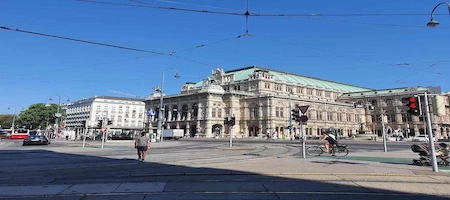
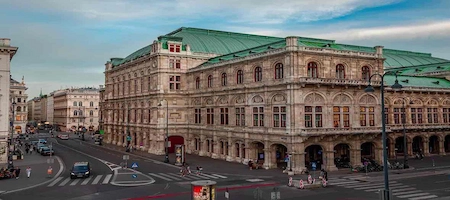
Begin at the Vienna State Opera
Start at the Opera’s main façade, where the old city meets the
Ringstrasse. Step back far enough to appreciate the arches, roofline
and relationship between the building and the surrounding streets.
This is also an easy meeting point with U-Bahn, tram and pedestrian
connections nearby.
Best starting point
Allow 10–20 minutes
Strong façade view
02
Continue toward Burggarten
Walk along the Opernring and pause beside Burggarten. The garden
introduces a softer landscape between the Ringstrasse and Hofburg’s
imperial zone. A short detour inside works well when you want greenery,
a quieter photograph or a break from the traffic of the boulevard.
Optional park detour
Imperial edge
Good rest point
03
Cross into the museum zone
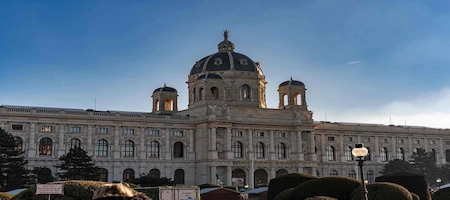
Continue along Burgring toward Maria-Theresien-Platz. The matching
Kunsthistorisches Museum and Natural History Museum create one of the
Ringstrasse’s strongest symmetrical compositions. The MuseumsQuartier
lies just beyond and can be added if contemporary culture or a longer
museum break is part of your plan.
Best symmetry
Museum option
Allow 15–30 minutes outside
04
Walk to the Austrian Parliament
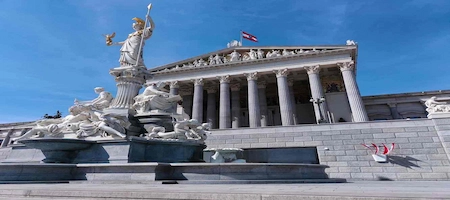
Follow the boulevard toward the Parliament Building. Its Greek-inspired
architecture and the Pallas Athena fountain make it one of the route’s
clearest expressions of political symbolism. The open space in front
allows a broad view of the façade, but use marked crossings and watch
for trams and cycle traffic when changing sides of the Ringstrasse.
Greek-inspired design
Political landmark
Excellent wide-angle stop
05
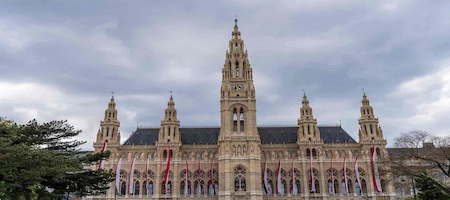
Pause at Rathaus and Rathausplatz
Continue toward Vienna City Hall, whose Neo-Gothic tower gives this
section of the boulevard a very different vertical profile. Rathausplatz
frequently hosts seasonal events, so the atmosphere and available
viewpoints can change throughout the year. Walk through Rathauspark
when you want shade or a calmer approach to the building.
Neo-Gothic landmark
Seasonal events
Park and benches nearby
06
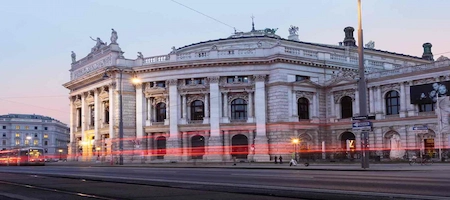
Compare Rathaus with the Burgtheater
The Burgtheater stands across the boulevard from Rathaus, creating a
strong visual conversation between civic government and cultural life.
This is a useful point to slow down: look across the Ring rather than
only walking directly beside each façade. The paired setting is part
of what makes this section feel so carefully planned.
Cultural landmark
Best paired view
Good late-day light
07
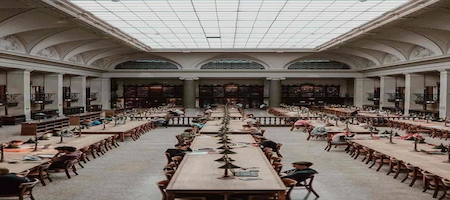
Finish at the University of Vienna
End the standard route at the University’s main building on
Universitätsring. Its historic façade brings the institutional sequence
to a natural conclusion. From here, use nearby public transportation,
continue toward Schottentor and the Votive Church, or return to the
Old Town through quieter central streets.
Natural finish point
Transport connections
Optional Votive Church extension
Route logic: Keep the first walk mostly outdoors. If one
interior is essential, choose it in advance and allow enough time rather
than interrupting the route with several unplanned museum visits.
Main Landmarks to See Along the Ringstrasse
The buildings are impressive individually, but their arrangement is what
makes the Ringstrasse distinctive. Each stop contributes a different civic,
cultural or imperial role to the boulevard.
Vienna State Opera
Culture
The Opera anchors the southern beginning of this route. Its arcaded façade
works best as both a close architectural study and a wider street scene.
Twin museum buildings
Collections
Kunsthistorisches Museum and the Natural History Museum frame
Maria-Theresien-Platz, providing balance, symmetry and one of the walk’s
most recognizable urban compositions.
Austrian Parliament
Politics
The building’s classical language and prominent fountain create a formal
political landmark that is easy to understand from the open boulevard.
Vienna City Hall
Civic life
Rathaus adds a dramatic Neo-Gothic silhouette and a busy public square
that changes character with festivals, markets and seasonal events.
Positioned opposite Rathaus, the theater contributes cultural symbolism
and one of the boulevard’s strongest paired institutional views.
University of Vienna
Learning
The main university building completes the route with an academic landmark
and convenient connections for continuing the day elsewhere in Vienna.
Best Ringstrasse Stops for Architecture and Photos
Ringstrasse photography is about scale, alignment and space. Instead of
photographing only decorative details, include tram lines, gardens, fountains
or the broad roadway to communicate the boulevard’s urban character.
Best balanced composition
Maria-Theresien-Platz
Use the central axis to frame the monument, gardens and matching museum
façades.
Best fountain foreground
Parliament
Frame the building through the Pallas Athena fountain or step back for the
complete façade.
Best vertical landmark
Rathaus
Use Rathauspark or the open square to create depth beneath the tall tower.
Best boulevard context
Burgtheater
Photograph across the Ring to include formal gardens, traffic and the
relationship with City Hall.
Early morning is useful for quieter foregrounds. Late afternoon often adds
warmer side light to façades, while blue hour gives the Opera, Parliament,
Rathaus and Burgtheater a more theatrical character. For additional locations,
continue with the guide to the
best photo spots in Vienna.
How Long the Ringstrasse Walk Takes
Pure walking time is only part of the calculation. Traffic lights, photographs,
parks and architectural stops determine the real duration. Choose one of the
following versions before starting.
About 75–90 minutes
Short highlights walk
Walk from the State Opera through the museum zone to Parliament and
Rathaus. Keep all stops exterior and finish near Rathausplatz.
Best for: limited time or a lighter sightseeing day.
About 2–3 hours
Standard Ringstrasse route
Follow all seven stops from the State Opera to the University, allowing
time for photographs, gardens and short architectural pauses.
Best for: first-time visitors and architecture lovers.
About 4–5 hours
Extended half-day walk
Add one museum or interior, a café stop, Burggarten, Rathauspark and an
extension toward the Old Town or Votive Church.
Best for: slower travelers and deeper cultural days.
Tips for Walking the Ringstrasse
Keep the walk architectural, not exhausting
The Ringstrasse can feel long when every building becomes a full interior
visit. Treat the boulevard itself as the main experience and select only
one major paid stop when time is limited.
If your energy drops, use a tram or U-Bahn connection rather than forcing
the full route. The guide to
how to get around Vienna
explains when walking and public transportation work best together.
01
Start in the morning or late afternoon
Midday works, but lower light is often more flattering for façades and
usually makes the walk feel less exposed in warm weather.
02
Watch tram tracks and cycle lanes
Use pedestrian crossings and check both directions before stepping
into transport or cycling corridors while photographing buildings.
03
Check Rathausplatz events
Markets, festivals and temporary structures can change both the
atmosphere and the available view of City Hall.
04
Choose one interior in advance
A museum, Parliament tour or cultural visit can enrich the route, but
several interiors will turn the walk into an overcrowded full day.
05
Wear comfortable shoes
The surface is straightforward, but standing for photographs and
making small park detours adds more time on your feet than expected.
Optional Extensions Beyond the Ringstrasse
Add only one extension unless the Ringstrasse is the main focus of your day.
Each option changes the walk’s character and makes it easier to adapt the route
to personal interests.
Continue into the imperial center
From Burggarten or the museum zone, turn toward Heldenplatz and the Hofburg
courtyards. This adds palace architecture and links the Ringstrasse with
Vienna’s imperial core.
Add the historic Old Town
Combine the boulevard with narrower central streets, Graben, Kohlmarkt and
St. Stephen’s Cathedral using the
Vienna Historic Center walking route
.
Explore the broader city center
Use the
Vienna City Center Walking Guide
to connect Stephansplatz, Hofburg and the Opera with part of the Ringstrasse.
Finish near Votive Church
From the University, continue toward Schottentor and Votive Church for a
final Neo-Gothic landmark before using public transportation or stopping
for a café.
More Things to Do in Vienna Beyond the Ringstrasse
The Ringstrasse explains Vienna’s monumental public face, but it is only one
layer of the city. A balanced first trip should also include the historic core,
one or two major interiors and time for cafés or neighborhood exploration.
Make Ringstrasse Sightseeing Easier with Vienna E-pass
A Ringstrasse walk is free when experienced from the outside. Vienna E-pass
becomes relevant when the same day also includes participating museums,
landmarks, audio guides or other paid experiences.
Self-guided route
The Ringstrasse Architecture and Empire audio guide is listed in the
Vienna E-pass attraction directory.
Simpler route planning
Review participating attractions before the walk and choose one or two
interiors that fit naturally along the route.
Flexible sightseeing day
Combine architecture outside with included cultural experiences based
on opening hours, weather and personal energy.
Final Thoughts on Walking Vienna’s Ringstrasse
The Ringstrasse is one of Vienna’s most rewarding walking routes because the
boulevard itself tells a coherent story. Opera, museums, government, theater,
education, parks and public squares appear as parts of one planned urban
sequence rather than isolated landmarks.
For a first walk, use the route from the State Opera to the University of
Vienna and allow approximately two to three hours. Keep the focus on façades,
views and city planning, then add one carefully selected interior or extension.
This creates a more memorable experience than trying to visit every building
in a single day.
Continue building the trip with the main
Vienna travel guide
and combine the Ringstrasse with central streets, Old Town history and the
attractions that match your interests.