Guide To Getting Around Vienna

Updated Date : 02 August 2026
Vienna Transport Guide

Vienna is one of Europe’s easiest cities to navigate. A practical combination of walking, U-Bahn services, trams and occasional bus connections makes it possible to move between major attractions without renting a car.

Continue to the Vienna Travel Guide

The best way to get around Vienna depends on where you are staying, how long you have, and which attractions you plan to visit. Most first-time visitors should walk through the historic centre and use public transport for longer journeys to places such as Schönbrunn, Prater and districts outside the central area.

Vienna’s public transportation system combines U-Bahn trains, trams and buses within one connected network. The Vienna E-pass can complement this transport planning by helping travelers organize attraction-heavy days, while a separate valid public transport ticket is still required for regular city transportation.

Is Vienna Easy to Get Around?


Yes. Vienna is easy to get around for first-time visitors. The historic centre is compact enough for walking, while the public transportation network makes longer journeys straightforward.

Quick answer for first-time visitors

Walk when attractions are close together and use the U-Bahn or tram when moving between different parts of the city. Most visitors do not need a rental car for sightseeing in Vienna.

A simple transport plan helps travelers avoid unnecessary transfers and repeated journeys across the city. It also makes it easier to balance major attractions with cafés, parks, meals and slower neighborhood exploration.

  • Central landmarks such as St. Stephen’s Cathedral, Graben, Hofburg and the Vienna State Opera can be connected on foot.
  • U-Bahn services are useful for longer journeys and attractions outside the historic centre.
  • Trams provide practical above-ground connections and a more visual way to experience the city.
  • Buses fill gaps in areas that are not served as directly by the U-Bahn or tram network.

Best Ways to Get Around Vienna


The following transport options cover most situations visitors encounter during a Vienna city break.

1

Walking Around Central Vienna


Walking is the best way to explore Vienna’s historic centre. Many famous landmarks are close together, and traveling on foot allows you to notice architecture, courtyards, shops and cafés that are easy to miss from public transport.

  • Best for Stephansplatz, Graben, Kohlmarkt, Hofburg, Albertina and the Vienna State Opera.
  • Ideal for short distances and first-day orientation.
  • Useful when a transport journey would take almost as long as walking.
  • Less practical when carrying luggage or traveling to attractions outside the centre.
Best use: Connect nearby landmarks on foot, then use public transport for one longer transfer later in the day.
2

Using the Vienna U-Bahn


The U-Bahn is usually the fastest way to cover longer distances within Vienna. It is particularly useful when your hotel is outside the historic centre or your itinerary includes attractions in different parts of the city.

  • Use it for fast connections between major transport hubs and districts.
  • It is useful for reaching Schönbrunn and connecting with central sightseeing areas.
  • Stations are identified by the letter U and the relevant line number.
  • Check the WienMobil app or current station information for service changes.
Best use: Choose the U-Bahn when walking would take too long or when you need to protect time on a short trip.
3

Taking the Tram in Vienna


Trams are both practical and scenic. They allow visitors to see Vienna above ground while traveling between central areas and surrounding districts.

  • Good for travelers who prefer a less rushed sightseeing pace.
  • Useful for routes around the Ringstrasse and connections beyond the immediate historic centre.
  • Easier for visual orientation because you can follow the streets and landmarks during the journey.
  • Allow extra time during busy traffic periods.
Best use: Take a tram when the route is direct and you would like to see more of the city during the journey.
4

Buses and Local Connections


Buses are useful for reaching locations not covered as directly by the U-Bahn or tram network. Most first-time visitors will use them less frequently in the historic centre, but they become valuable for wider city exploration.

  • Useful for local connections between neighborhoods and transport stations.
  • Helpful when the final part of a journey is not close to a metro or tram stop.
  • Night bus services may provide an alternative when regular daytime connections are not operating.
  • Use a route-planning app rather than trying to memorize individual bus routes.
Best use: Use buses for specific local journeys, not as the main foundation of a first-time sightseeing itinerary.
5

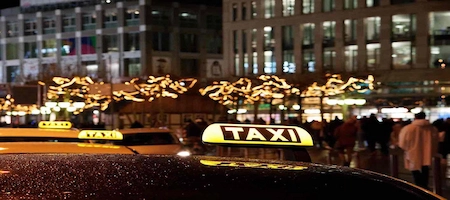
Taxis and Ride Options


Taxis are useful when convenience matters more than cost. They can be especially practical for travelers with luggage, families, late-night journeys or destinations that require several public transport changes.

  • Useful for door-to-door hotel and station connections.
  • Convenient for families or small groups sharing the cost.
  • Helpful for late arrivals or departures.
  • Journey time and cost can increase during heavy road traffic.

For airport journeys, compare rail, bus and taxi options according to your luggage, arrival time and hotel location. The airport lies outside Vienna’s standard core public transport zone, so an ordinary city ticket does not automatically cover the complete airport journey.

Best use: Reserve taxis for luggage, late-night convenience, airport travel or journeys where several transfers would be difficult.
6

Bikes and Alternative Ways to Explore


Cycling can be an enjoyable way to explore Vienna in suitable weather. It works best for travelers who are confident in urban traffic and want to experience parks, riverside areas or longer outdoor routes at a different pace.

  • Best in dry and comfortable weather.
  • Useful around parks, riverside routes and less crowded areas.
  • Less suitable for visitors unfamiliar with local cycling rules.
  • WienMobil can help compare cycling routes with public transport and walking options.
Best use: Treat cycling as a sightseeing experience rather than the default transport method for every day.

How Vienna Public Transport Tickets Work


A valid public transport ticket is required for the U-Bahn, trams and buses. The same Wiener Linien ticket system generally covers these services within Vienna’s core city zone, depending on the ticket type and validity period.

Where Visitors Can Buy Tickets


  • Multilingual ticket machines at U-Bahn stations.
  • Wiener Linien ticket and information offices.
  • The official WienMobil mobile application.
  • The Wiener Linien online ticket shop.
  • Many tobacconists and selected sales points.

Ticket Validation


Paper tickets that are not already time-stamped usually need to be validated before the first journey. At U-Bahn and S-Bahn stations, validation machines are located near station entrances. On trams and buses, paper tickets that require validation are stamped inside the vehicle.

Mobile tickets must be purchased and activated according to their instructions before starting the journey. Always check the exact conditions displayed on your ticket.

Important: Vienna’s U-Bahn generally does not use entry barriers. The absence of gates does not mean transport is free. Ticket inspections take place, and passengers must be able to show a valid ticket.

Ticket types, prices and conditions can change. Before traveling, check the current information on the official Wiener Linien ticket page .

What Is the Best Transport Option for Tourists in Vienna?


Most tourists should combine walking with the U-Bahn and trams. The ideal balance depends on trip length, budget, mobility needs and sightseeing pace.

Traveler Type Best Transport Choice Why It Works
First-time visitors Walking, U-Bahn and tram This combination covers central landmarks while keeping longer journeys simple.
Short stays U-Bahn for transfers, walking within each area It reduces travel time without missing the atmosphere of central Vienna.
Budget travelers Walking plus the most suitable public transport ticket Grouping attractions reduces unnecessary journeys and transport costs.
Families U-Bahn, tram and occasional taxi Public transport handles most journeys, while taxis can simplify travel with luggage or tired children.
Couples Walking and scenic tram journeys This allows a slower pace and more time for cafés, architecture and spontaneous stops.
Travelers with luggage Rail connection or taxi, depending on destination Fewer transfers make arrival and departure more comfortable.
When is walking better than public transport?

Walk when two attractions are within the same central area. Using public transport for a very short journey can take longer once walking to the station, waiting and changing platforms are included.

How to Plan Sightseeing Routes in Vienna


Good route planning is more important than choosing the fastest transport for every individual journey. Organize each sightseeing day around one main area and use public transport only when changing to another part of the city.

Historic Centre Route

Connect St. Stephen’s Cathedral, Graben, Kohlmarkt, Hofburg, Albertina and the Vienna State Opera mainly on foot.

Schönbrunn Route

Use the U-Bahn for the longer journey to Schönbrunn, then explore the palace area and gardens on foot.

Belvedere and Karlsplatz Route

Combine Belvedere with nearby cultural areas, Karlskirche or central connections rather than returning repeatedly across the city.

Prater and Leopoldstadt Route

Use public transport to reach the area, then combine Prater, the Giant Ferris Wheel and nearby neighborhood exploration.

Neighborhood Route

Travel to one district by U-Bahn or tram and continue on foot through local streets, cafés, shops and cultural areas.

If you are spending a long weekend in the city, use the 3 days in Vienna itinerary to see how walking and public transport can be combined into realistic daily routes.

Make Sightseeing Easier with the Vienna E-pass


Combine Route Planning with Attraction Planning


The Vienna E-pass can support attraction-heavy sightseeing days by helping visitors organize several included experiences within one itinerary. This can reduce the time spent comparing and managing separate attraction tickets.

It works best when you first group attractions by area and then choose the simplest walking, U-Bahn or tram connection between them.

  • Helpful for short trips with several major attractions.
  • Practical for first-time visitors creating structured sightseeing days.
  • Useful when included attractions already match your itinerary.
  • Best used alongside realistic transport and walking routes.

The Vienna E-pass is an attraction-planning product and should not be treated as a replacement for a Wiener Linien public transport ticket unless the current product information specifically states otherwise.


View Vienna E-pass Attractions

Final Tips for Getting Around Vienna


The easiest way to navigate Vienna is to combine walking with public transport. Walk through compact sightseeing areas, use the U-Bahn for longer journeys and choose trams when a direct above-ground connection fits your route.

  • Group nearby attractions before choosing transport.
  • Buy and validate the correct ticket before traveling.
  • Use WienMobil or current station information for live route planning.
  • Check whether airport travel requires an additional or separate ticket.
  • Keep taxi travel for situations where convenience justifies the additional cost.
  • Allow extra time when traveling with luggage or children.

Continue planning with the complete Vienna Travel Guide or turn this advice into a daily sightseeing plan with the 3 days in Vienna itinerary .

Get Free Guidebook
I want to receive emails to help me plan my trip to Vienna, including attraction updates, itineraries & exclusive E-pass holder discounts on theatre shows, tours, and other city passes in adherence to our data policy. We do not sell your data.